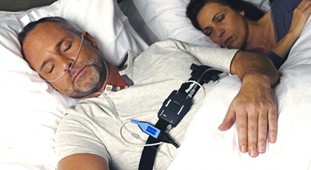
A diagnosis of sleep apnea can only be made after a sleep study confirms you are experiencing breathing problems in your sleep, and other sleep disorders or health problems have been ruled out. In order to determine whether you should be referred for a sleep study, a doctor will first perform a physical exam, ask about symptoms, and collect your personal and family history.
Polysomnogram
A polysomnogram is a sleep study in which medical devices are used to monitor a person’s breathing, heart rate, and the electrical activity of their brain waves while they sleep. A person must have a polysomnogram, either in a sleep lab or at home, in order to be diagnosed with sleep apnea.
If you have a polysomnogram at a sleep lab, your health care provider will give you instructions on when to arrive, what to bring with you, and whether you should make any changes to your diet or medications that day.
After acclimating to your room at a sleep lab, a technician attaches monitoring devices to your legs, fingers, chest, and head. The devices measure body processes while you sleep. The data are then translated into stages of sleep, wakefulness, and events where breathing is interrupted.

Home Sleep Apnea Tests
A home sleep apnea test may be an option for people who are suspected of having moderate to severe obstructive sleep apnea based on their symptoms or physical exam. An Home Test takes fewer measurements than an in-lab sleep study, so it is not the preferred choice for people who are suspected of having other sleep disorders.
That said, home sleep apnea tests do provide some benefits. For example, when a person sleeps in the comfort of their own home, they are more likely to have longer periods of sleep.
To set up a home sleep apnea test device, you strap a device across your abdomen and chest, wear an oxygen probe on your finger, and insert a nasal tube.